INSEIN
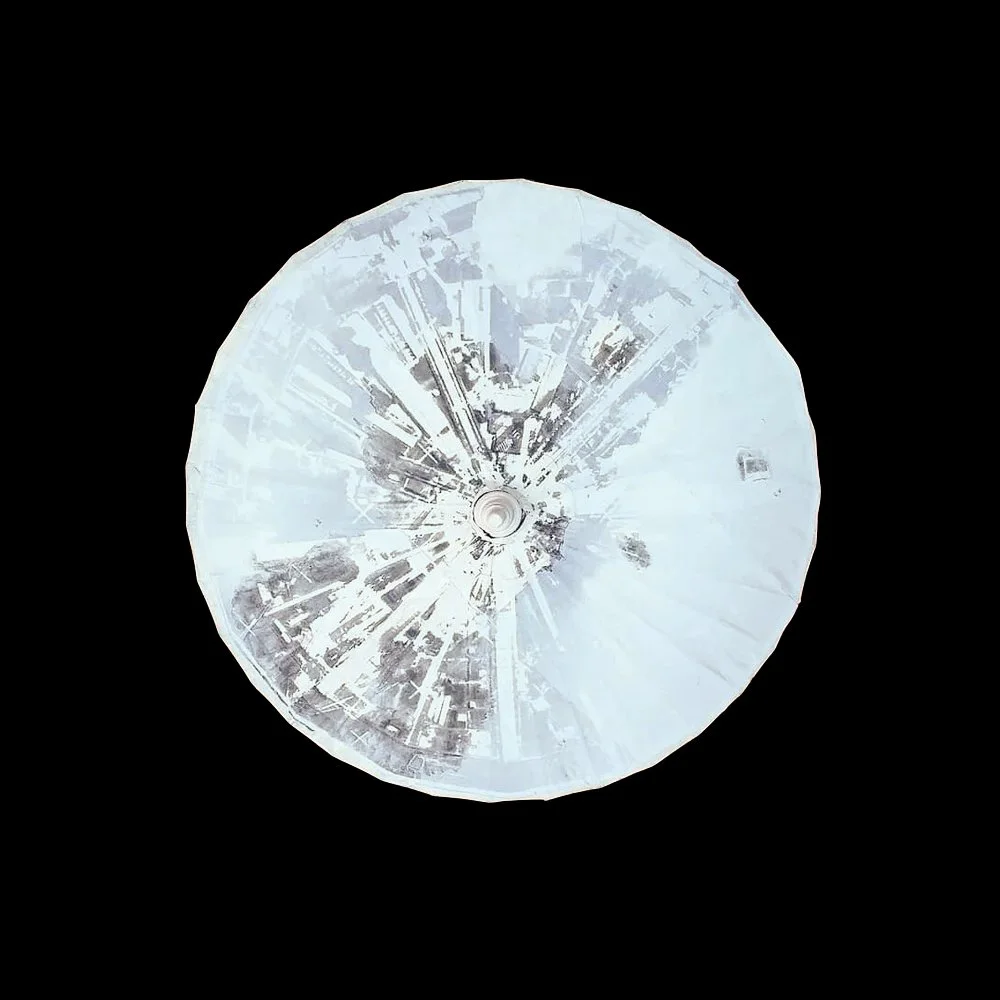
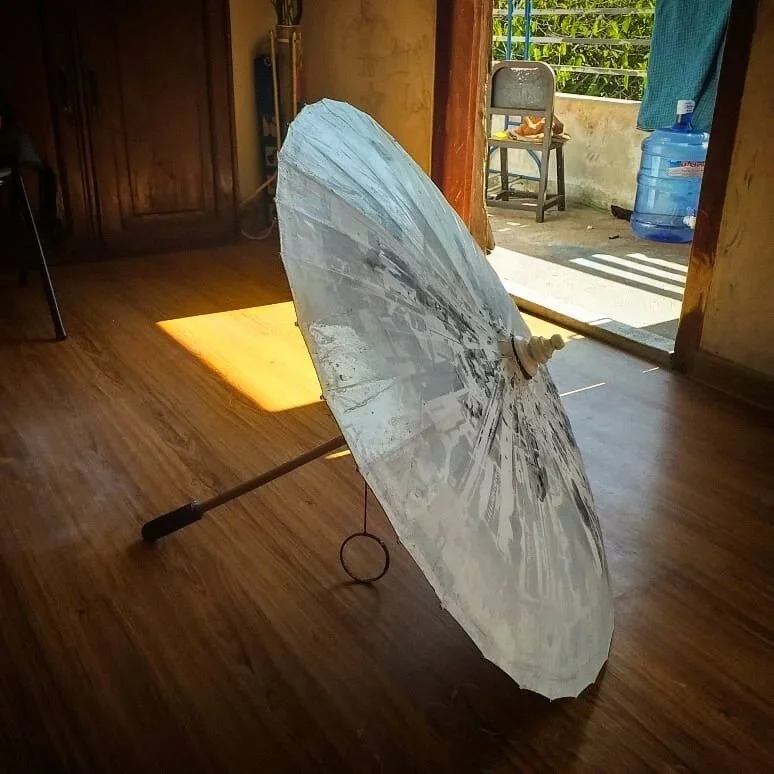
Insein is a mixed-media artwork created by intervening on a traditional Burmese parasol.
The piece was commissioned as part of the Parasol Project 2019 exhibition at River Gallery in Yangon.
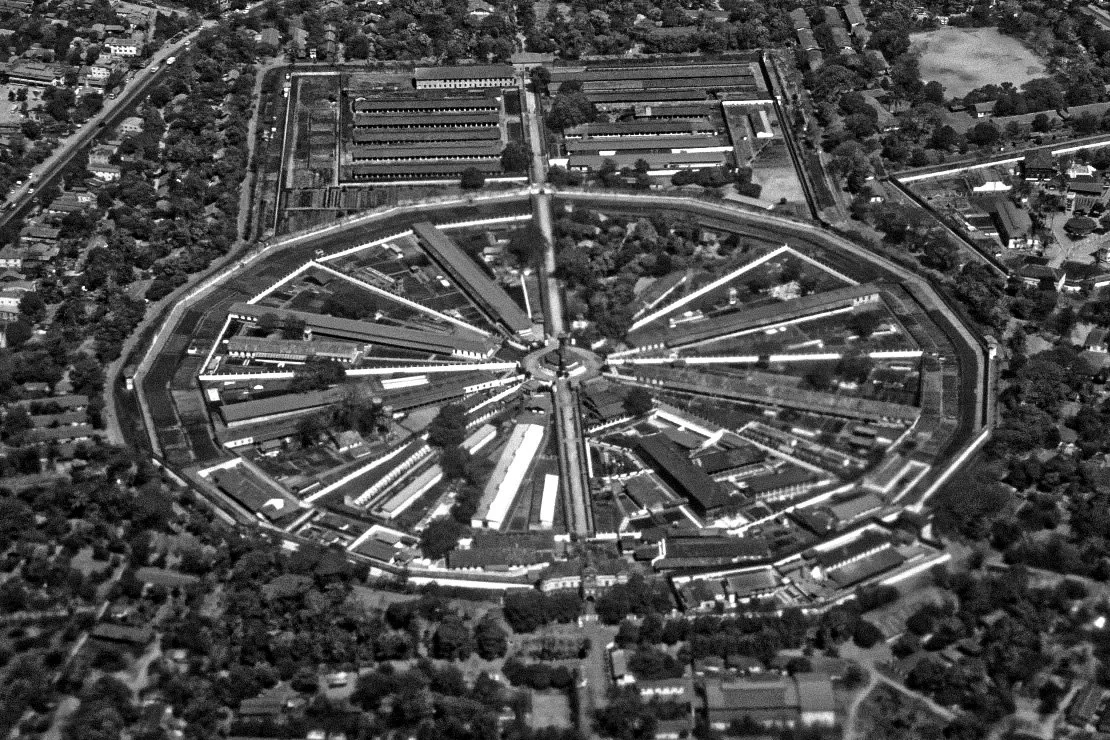
The artist chose the image of Insein Prison, a infamous building in Myanmar, as the central visual motif. Insein was known as one of the most violent and inhumane prisons of the British Empire, and this record continued in successive governments, including the long military rule that exists to this day.
The prison was built by the British in 1887, possessing a layout drawing on Panopticon principles: a prison architecture system conceived by Jeremy Bentham in the late 1700s. Its objective is to optimize visibility and control over the detainees. This type of design features radial wings extending from a central observation tower, allowing maximum surveillance and minimal interaction among inmates.
Ideally, the layout allows for all prisoners of an institution to be observed by a single prison officer, without the inmates knowing whether or not they are being watched. This permanent visibility induces a state of conscious and automatic self-regulation, whereby individuals internalize surveillance and discipline their own behaviour, an effect that extends beyond prisons and becomes characteristic of authoritarian and disciplinary regimes. Michel Foucault theorized this condition as the ‘internalization of power’.
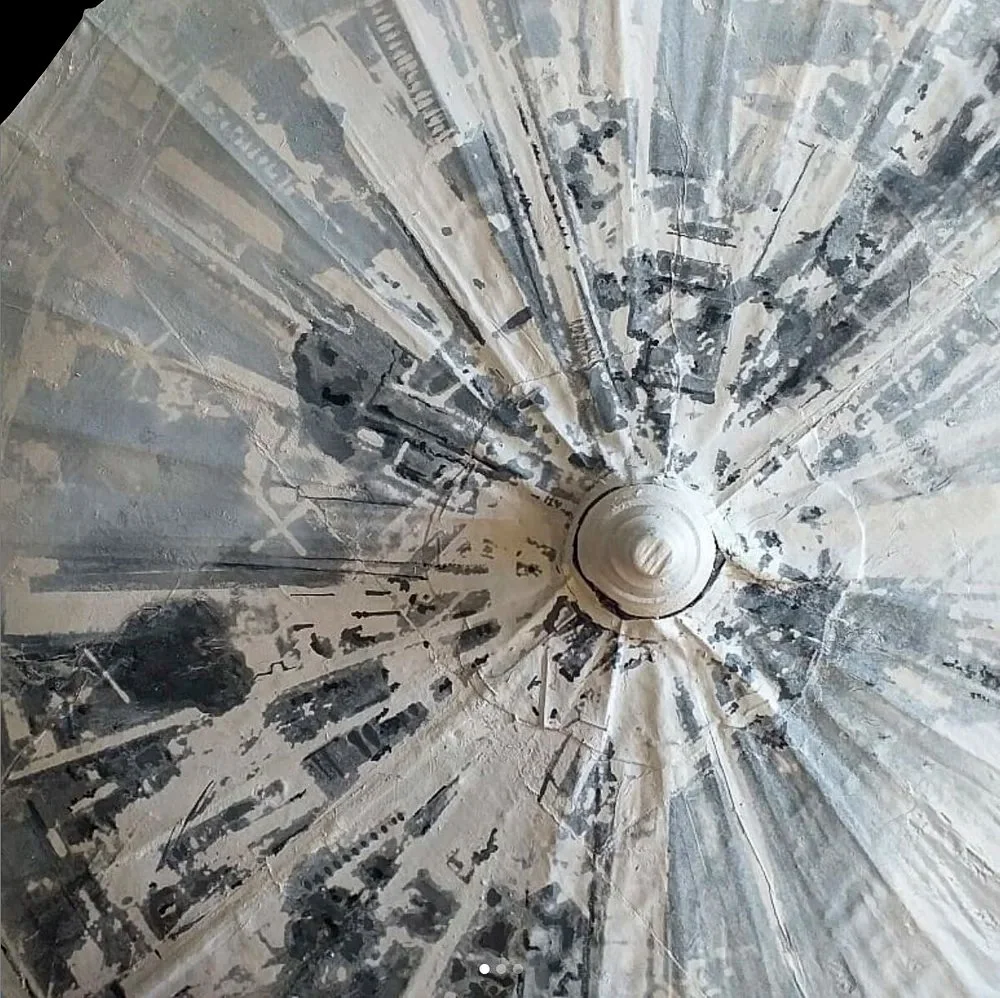
On the surface of the object, the constructed image evokes a satellite image of the jail. In this way, the parasol pivots its reading from a Burmese symbol of protection and intimacy to one of control by introducing themes of surveillance. While the architecture of the prison functions as a technology of control, prisoners and their stories are kept hidden from the external world. Access to independent observers is limited, and impunity for custodial violence is the norm.
The satellite can be perceived as the ultimate panoptic device, born from the military ecosystem. By this, we mean the interconnected network of institutions, technologies, industries, ideologies and infrastructures that sustain modern warfare and security regimes. From its orbit, it observes without being perceived and collapses distance between territory and command. By turning the vigilant military technology into the compound itself, the piece asks: who watches the watchmen?
Many artists have been inside the walls of this prison. Some remarkable accounts have survived in different formats, from poems to paintings, while many others have disappeared with their authors.
The work stands as a tribute to all the artists lost to Insein Prison.
Insein, 2019
mixed media on burmese traditional parasol
120 x 80 x 80 cm